
A comprehensive breakdown of legal entities, incorporation steps, and regulatory compliances required to establish your commercial operations in India.
Foreign companies and investors have several options when entering the Indian market. The choice depends on your business goals, capital investment, and planned commercial activities.
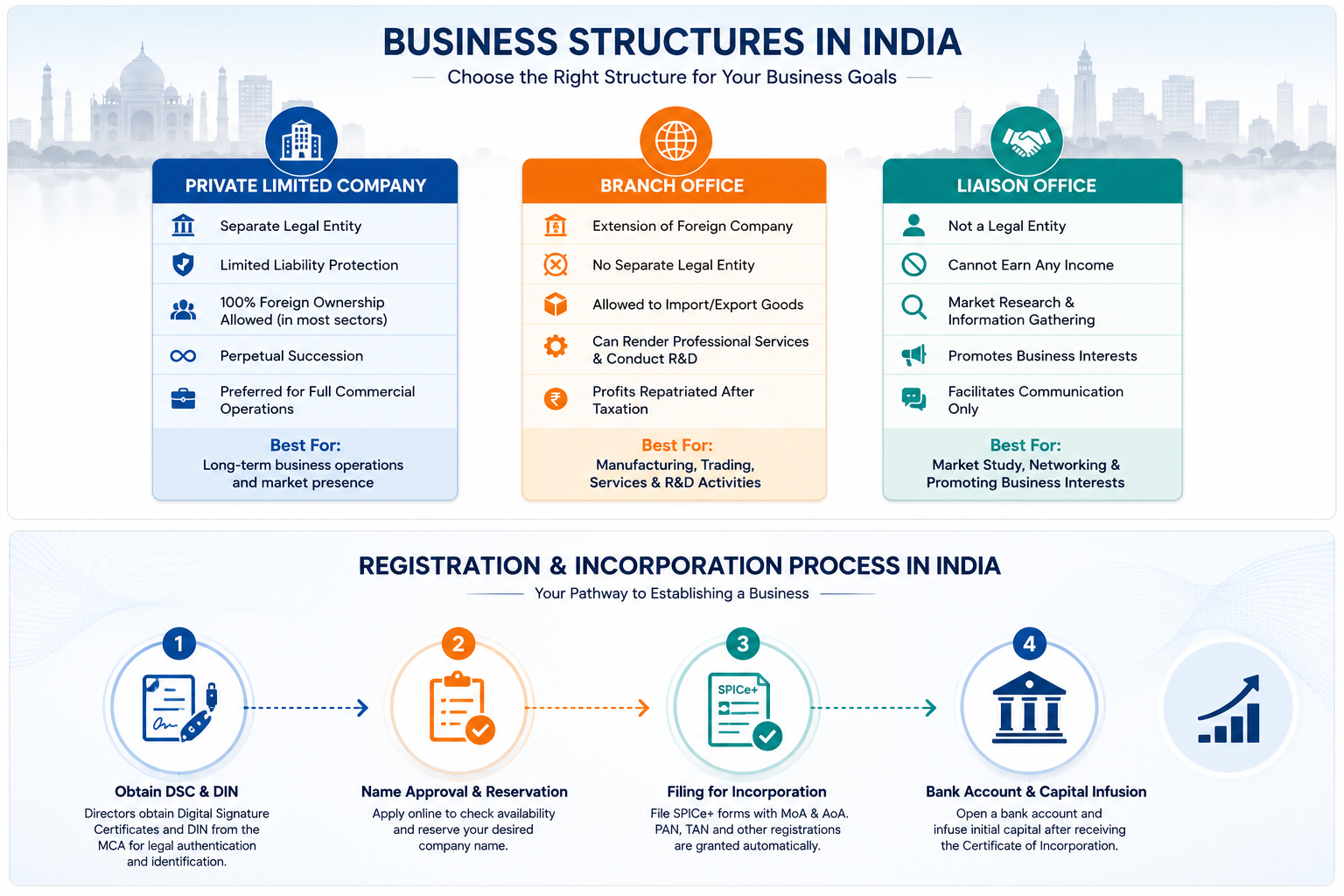
A wholly owned subsidiary is the most preferred route for full commercial operations. It is treated as a domestic Indian entity with limited liability and allows 100% Foreign Direct Investment (FDI) in most sectors.
Foreign companies engaged in manufacturing and trading can set up branch offices to import/export goods, render professional services, or conduct research and development within the country.
Best suited for companies looking to study the Indian market or facilitate trade communications. A liaison office cannot generate any direct income or engage in commercial activity in India.
The Ministry of Corporate Affairs (MCA) governs business setup through a streamlined digital process. Here are the core phases required to formalize your company registration:
Every proposed director must secure a digital signature certificate to sign electronic application forms. DINs are uniquely allocated by the central database for legal verification.
Submit distinct name choices via the web application to check for existing trademarks or identical registrations. Approval secures your business name identity.
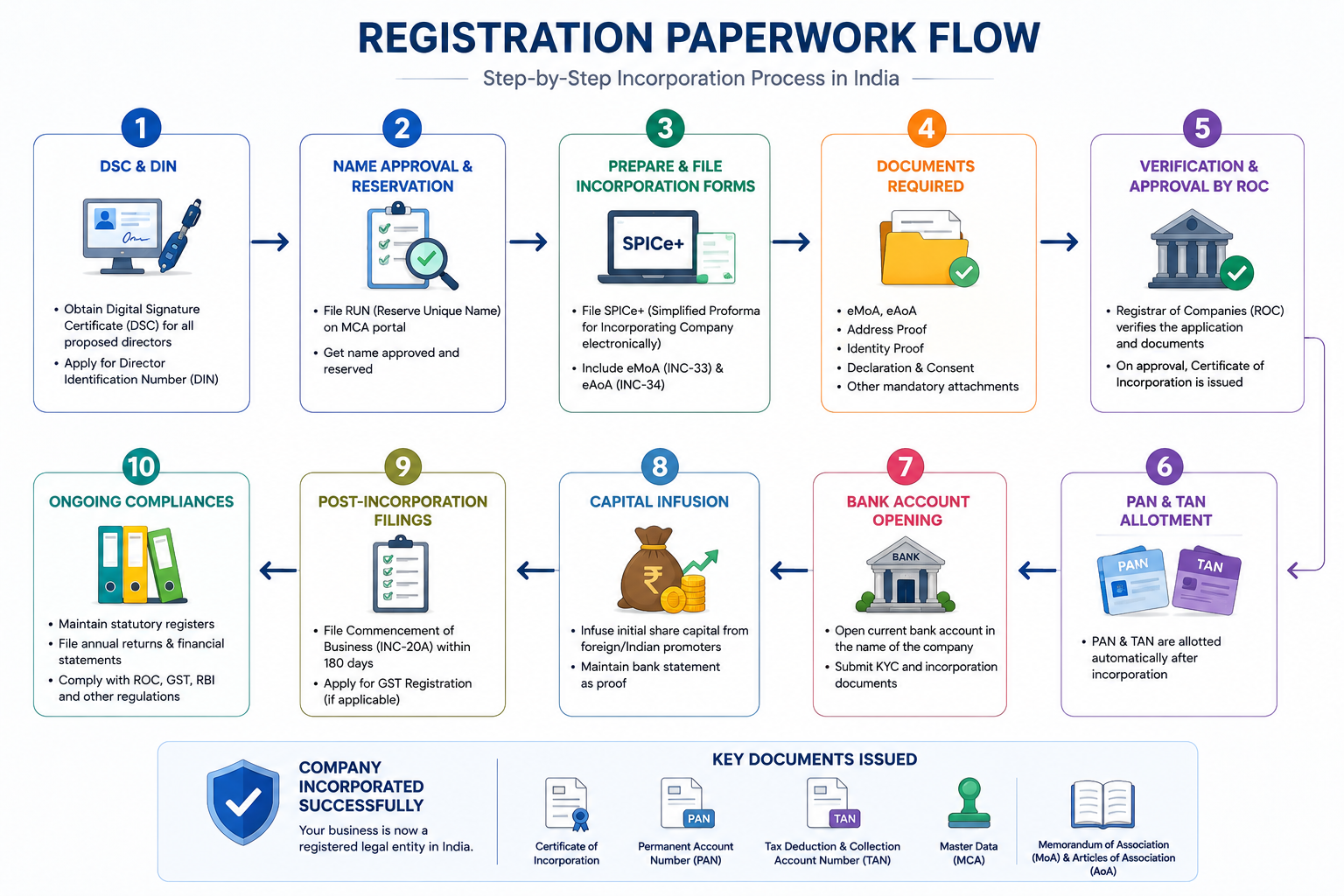
Submit the formal documentation including the Memorandum of Association (MoA) and Articles of Association (AoA). This consolidated system automatically handles corporate tax numbers (PAN and TAN) simultaneously.
Once the Certificate of Incorporation is issued, the company opens a local bank account to receive the initial equity capital funding from overseas investors.
After obtaining your registration certificate, your new entity must adhere to certain regular corporate filings to remain fully compliant:
Our legal and tax experts assist with cross-border incorporation corporate suites, regulatory setups, and corporate banking arrangements.
